
Book a Demo
Schedule a personalized demonstration of our solutions
Home » bLOGS & NEWS
June 8, 2026
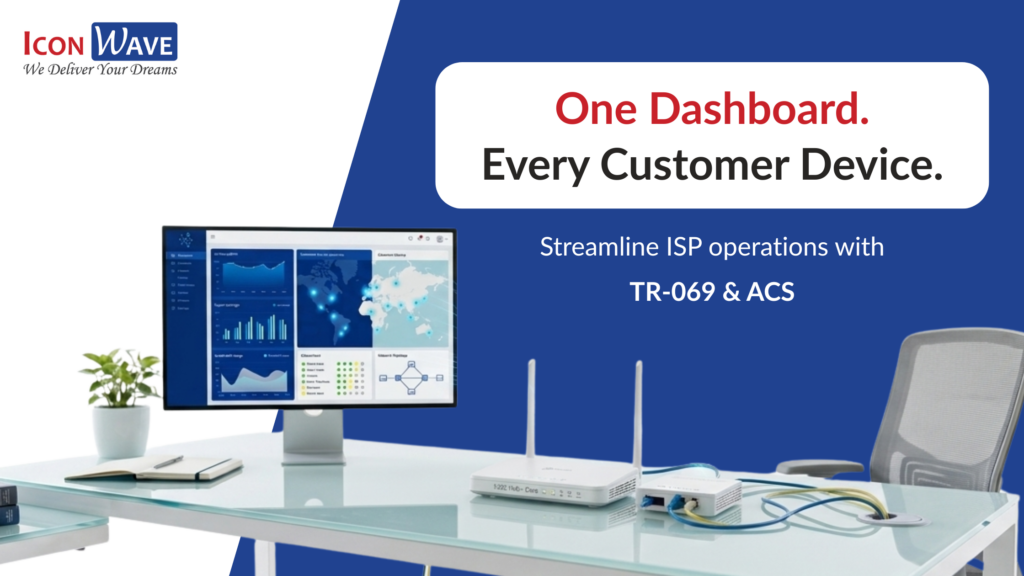
How ISPs Can Fix Router Problems Before Customers Lose Patience
A customer calls your support team and says:
“My internet is slow. I have restarted the router three times. Please send someone.”
In the old way, the ISP support agent asks many questions, guides the customer step by step, and often sends a technician to the customer’s home. This takes time, costs money, and makes the customer unhappy.
Now imagine a smarter way.
The support agent opens one dashboard, checks the customer’s router remotely, sees the Wi-Fi signal, firmware version, uptime, connected devices, and error logs, then fixes the problem without visiting the home.
That is the power of TR-069 and ACS.
TR-069 is a standard used by ISPs to remotely manage customer devices such as:
In simple words, TR-069 helps an ISP talk to customer devices safely from a central system.
That central system is called an ACS, which means Auto Configuration Server.
Think of ACS as the ISP’s “remote control room” for all customer devices.
Today, customers expect the internet to work like electricity. They do not care whether the issue is in the router, ONT, Wi-Fi channel, firmware, cable, DNS, or configuration.
They only know one thing:
“The Internet is not working.”
For an ISP, this creates pressure on:
Without a proper network device management system, every small issue becomes a support ticket. Every support ticket can become a technician visit. Every technician visit costs money.
This is where TR-069 ACS makes ISP operations faster, cleaner, and more profitable.

Without ACS, a technician may need to manually configure every router:
This is slow and error-prone.
With ACS, the device can automatically receive the right configuration when it connects to the network.
The customer plugs in the router, and the ACS does the setup in the background.
Simple.
Fast.
Professional.
One of the biggest benefits of ACS is remote diagnosis.
Support teams can check:
Instead of guessing, the ISP can see real device information.
This changes support from:
“Please restart your router.”
to:
“I can see your router is online, but your Wi-Fi channel is congested. I will change it now.”
That is a much better customer experience.
Technician visits, also called truck rolls, are expensive.
A real telecom case study from Wipro shows how costly these visits can become.
“On an average, the client experienced 500 cases of truck roll visits every month, and each visit cost approximately 150 AUD. An annual estimate pegs these costs at approximately 0.9 million AUD/year.”
— Wipro's telecom case study
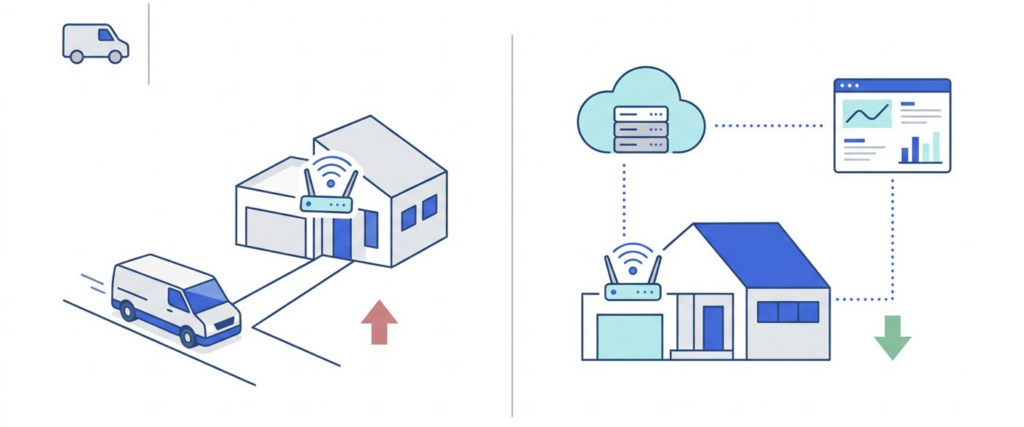
This is exactly why remote device management matters. If an ISP can fix even a small percentage of issues remotely, the savings can be huge.
In the same case study, Wipro reported:
“Realized cost savings for the client: 1.12 Million AUD.”
— Wipro's telecom case study

For ISPs, fewer truck rolls mean:
Every ISP knows this problem:
A router model has a bug. Maybe Wi-Fi drops. Maybe security is weak. Maybe IPTV freezes. Maybe VoIP has issues.
Without ACS, updating firmware is painful.
With ACS, the ISP can push firmware updates remotely to selected devices.
For example:
This helps improve security, performance, and service quality without disturbing customers.
Customers do not want long calls. They do not want to repeat the same problem to different agents. They do not want to wait for technicians.
ACS helps ISPs improve customer support by giving agents the tools to solve problems quickly.
This is important because customer experience is now one of the biggest differences between ISPs.
Speed matters, but support quality also matters.
A customer may forgive a short outage. But they will not forgive poor support.
Here is a simple view:
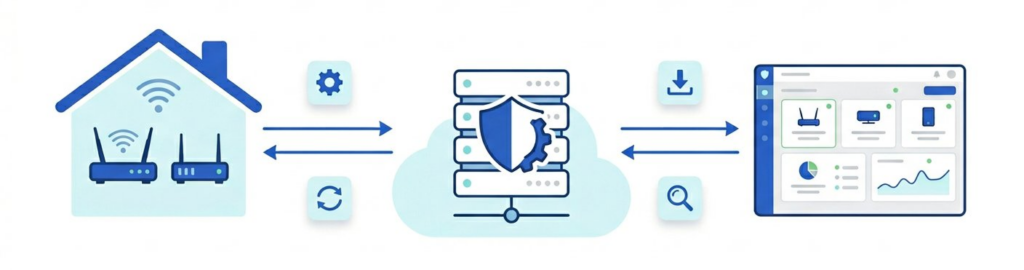
The ACS can perform actions like:
This makes the ISP’s device network more controlled and organized.
Let’s say a customer upgrades from a 50 Mbps plan to a 200 Mbps plan.
Without ACS:
With ACS:
This is how automation improves revenue and customer satisfaction at the same time.
TR-069 is not limited to one type of broadband network.
It can be useful for:
So whether an ISP is fiber-based, wireless-based, or hybrid, ACS can become a key operations tool.

Modern ISPs are moving beyond basic device management.
The next stage is:
For example, a customer could open an ISP app and:
Behind the scenes, ACS makes these actions possible.
This reduces call center load and gives customers more control.
TR-069(ACS) may sound technical, but the idea is very simple:
Help ISPs manage customer devices remotely, safely, and smartly.
In a competitive broadband market, ISPs cannot depend only on fast internet plans. They also need fast installation, fast support, fewer complaints, and lower operating costs.
This is where solutions like IconACS (Network Device Management Software) help ISPs simplify TR-069 (ACS) device management, reduce support efforts, and deliver a better customer experience.
It turns device management from a manual headache into an automated advantage.
For ISPs, it means smoother operations.
For support teams, it means fewer blind guesses.
For customers, it means better internet with less waiting.
And in today’s broadband world, that is not just useful — it is necessary.